
Cambrian Explosion in the Zero Barrier Era

Theme
Products, interfaces, businesses – the cost of making just about anything is approaching zero. As Fast Company covers, a team of two rebuilt the interface of a $29 billion company in a week. The wall between designer, developer, and founder is gone.
This was always the promise of software: that ideas could scale without the friction of physical production. What’s changed is that the last remaining hurdle, the technical skill required to build, has collapsed too. You no longer need to know how to code to ship code. You no longer need a design team to have a designed product. The bottleneck has moved, and it has moved decisively, away from execution and toward something harder to name and harder to replicate. What gets built now, and who builds it, is an entirely different question.
Signal
The standard read on this shift goes something like: when creation gets cheap, the work gets commoditized, so value moves up the stack to taste and discernment. That’s true, but incomplete. It still imagines a few good taste-makers rising to the top of a flattened field.
The more interesting shift is structural. When the cost of building approaches zero, the economics of personalization also change. Products and experiences that once required a funded company become viable at the scale of one. What people follow will shift accordingly toward what is in proximity to them and what is made for their context and community. The Cambrian explosion isn’t just about volume of work produced, but also the diversity of small, highly adapted things filling niches that generalist products never could.
Taste still matters, sure, but the question is no longer just whether you have it. It’s whether it’s specific enough to find the people it belongs to.
Summit
Creative workflows are shifting from isolated tools to unified environments where models and media can move together, and no one knows this better than FLORA.
We’re welcoming FLORA to the sponsor lineup and their founder Weber as a speaker at our upcoming AI & Creativity Summit in New York.
FLORA is building the creative environment for the generative era with all the best creative AI models across text, image and video in one infinite canvas. Connect media together to build generative workflows and explore any creative idea faster than ever before.
Pulse
-
Luma AI launches creative AI agents powered by its new ‘Unified Intelligence’ models: Designed to handle end-to-end creative work across text, image, video, and audio.
-
Netflix acquires Ben Affleck’s startup InterPositive: Which builds AI models from a film’s dailies to assist with postproduction tasks like color, relighting and VFX while keeping filmmakers “at the center of the process.”
-
Our friends at Luma AI, AWS, and ElevenLabs are hosting a workshop at SXSW: Where brands, filmmakers, and agency leaders will have the chance to build AI-workflows from scratch.
We hope to see you in NY on May 14, 2026, where we will continue these conversations on the forefront of AI and Creativity:
If you’re creating something aligned with Artist and the Machine or you’d like to recommend work shaping this space, we’d love to see it for the chance to be featured. Reach out to us at community@artistandthemachine.com.
Til next time,
Artist and the Machine.
xx

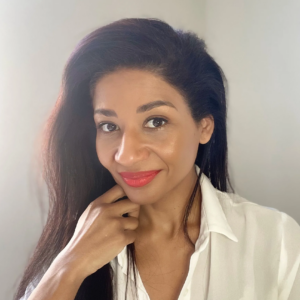

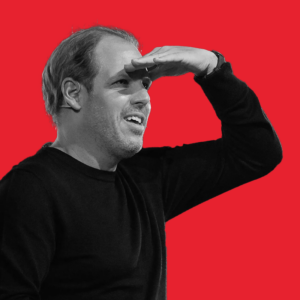









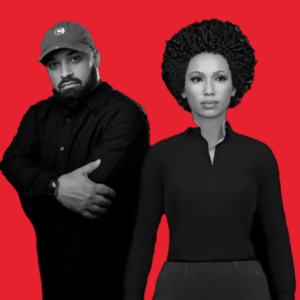
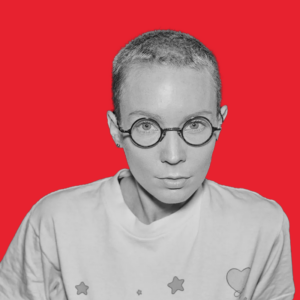




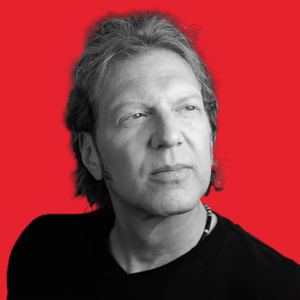

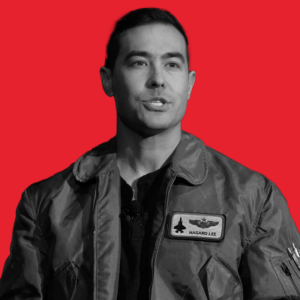






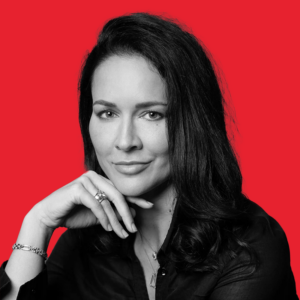






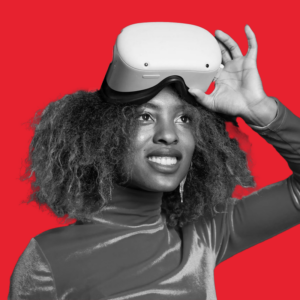


 Paige Piskin is an award-winning AI and XR creator, known for pushing the boundaries of digital makeup, character design, and augmented reality experiences. With AR effects generating more than 300 billion impressions, shared 2 billion times, Paige has worked with major brands like Netflix, Bratz, Warner, and Coldplay, bringing immersive storytelling to life. She has also been a guest judge for Netflix, consultant, and 2x hackathon winner, recognized for her innovative work in AI-driven AR experiences. Paige is passionate about blending generative AI with character design, expanding the possibilities of digital self-expression and interactive storytelling.
 Claire Silver is an anonymous AI-Collaborative artist that works with oil, acrylic, collage, photography, and different digital mediums to create her work. She often blends the classical style and mythos into her art, collaboratively producing work that feels at once familiar and strange. Her work explores themes of innocence, trauma, the hero’s journey, and how our view of them will change in an increasingly transhumanist future. Claire’s art can be found in the permanent collection of the Los Angeles County Museum of Art, has been at Sotheby’s London and Christie’s New York and in galleries, museums, and festivals all over the world. Featured in the New York Times, WIRED, Fortune, NPR, and countless podcasts, Claire takes every opportunity to explore her unending fascination with AI, fight for visibility for this budding art movement, and wonder at the magnitude of this moment in history. She often feels like a caveman painting fire. Claire is vocal in her belief that with the rise of AI, for the first time, the barrier of skill is swept away and that in this evolving era, taste is the new skill.