
Creative Direction, Now Hiring
Theme
Something is shifting in how AI touches creative work. For years, the model was augmentation – AI as a faster brush, a cheaper render, a tireless assistant. The emerging model is different. Agents now handle end-to-end creative production, planning work, executing across formats, evaluating outputs, returning for direction only when a decision is genuinely human. Luma’s recent announcement is one proof point among many, and the pattern is becoming hard to ignore. So then, what does creative work actually consist of once production is handled?
Signal
When production is compressed, the work that remains is almost entirely conceptual. Creative direction. Brand logic. The decision about what’s worth making at all. Two-person teams can now run campaigns that used to require dozens. The arithmetic of creative bandwidth is being revised in real time, and the open question is no longer whether the workload shrinks (it does), but whether the thinking expands to fill it.
The most useful parallel here might come from film. When digital cameras made professional-quality production affordable, the question shifted towards whether the person behind the equipment had an idea worth capturing. Technical barriers came down, but the creative and narrative demands didn’t. Creative AI tooling is doing something structurally similar, just faster and across more disciplines at once. The people positioned well are those who carry strong creative opinions and have something compelling to say.
Summit
Creative work in AI is moving from prompts to agents that execute. Fresh off the launch of UNI-1 and Luma Agents, their new unified intelligence system for end-to-end creative workflows, we’re welcoming Luma as a sponsor of our upcoming AI & Creativity Summit in New York! Luma’s approach centers on physically intelligent creative agents that maintain context, route the right models, and advance work across stages so teams can stay focused on taste, direction, and intent.
Luma is defining a new paradigm for creative work with unified intelligence systems, where models, agents, and teams collaborate with shared context to execute across the entire workflow. Built on advanced world models and designed for media, entertainment, marketing, and beyond, Luma enables teams to direct, iterate, and scale creative work with speed, control, and coherence.
We’re excited to welcome new voices to our Speaker lineup: Marcus Frodin (Head of Engineering, Spotify), Ceej Vega (Creative Technologist), Francis Pierrel (Founder & CEO, LR Paris), and many more. There’s big news on the horizon. Don’t miss Summit Announcements on our Socials – Linkedin & Instagram.
Pulse
-
Scientists discover AI can make humans more creative: AI is often framed as replacing human work, but new research from Swansea University shows it functions more effectively as a creative collaborator.
-
Meta buys ‘social media network for AI’ Moltbook: A Reddit-like social network where AI agents talk to each other, moving the team into its Superintelligence Labs to explore new ways autonomous bots can collaborate and work for people and businesses.
-
OpenAI shuts down Sora: Disney pulls its planned investment.
If you’re creating something aligned with Artist and the Machine or you’d like to recommend work shaping this space, we’d love to see it for the chance to be featured. Reach out to us at community@artistandthemachine.com
Til next time,
Artist and the Machine.
xx

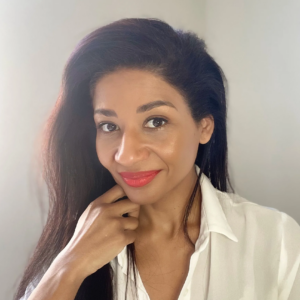































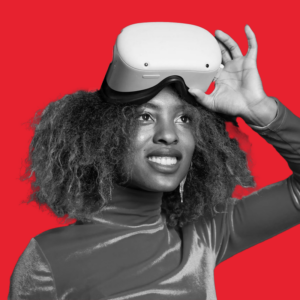


 Paige Piskin is an award-winning AI and XR creator, known for pushing the boundaries of digital makeup, character design, and augmented reality experiences. With AR effects generating more than 300 billion impressions, shared 2 billion times, Paige has worked with major brands like Netflix, Bratz, Warner, and Coldplay, bringing immersive storytelling to life. She has also been a guest judge for Netflix, consultant, and 2x hackathon winner, recognized for her innovative work in AI-driven AR experiences. Paige is passionate about blending generative AI with character design, expanding the possibilities of digital self-expression and interactive storytelling.
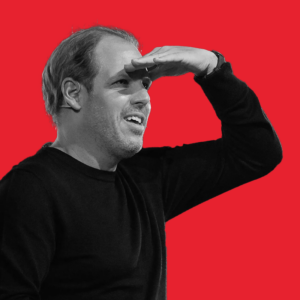
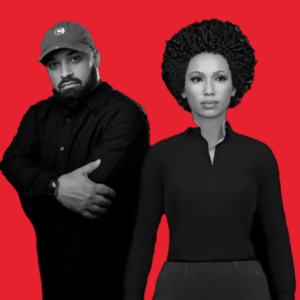
 Claire Silver is an anonymous AI-Collaborative artist that works with oil, acrylic, collage, photography, and different digital mediums to create her work. She often blends the classical style and mythos into her art, collaboratively producing work that feels at once familiar and strange. Her work explores themes of innocence, trauma, the hero’s journey, and how our view of them will change in an increasingly transhumanist future. Claire’s art can be found in the permanent collection of the Los Angeles County Museum of Art, has been at Sotheby’s London and Christie’s New York and in galleries, museums, and festivals all over the world. Featured in the New York Times, WIRED, Fortune, NPR, and countless podcasts, Claire takes every opportunity to explore her unending fascination with AI, fight for visibility for this budding art movement, and wonder at the magnitude of this moment in history. She often feels like a caveman painting fire. Claire is vocal in her belief that with the rise of AI, for the first time, the barrier of skill is swept away and that in this evolving era, taste is the new skill.