
In AI galaxy far, far away…
📰 News Roundup
-
GoogleIO: Google announced huge upgrades to its AI efforts as part of GoogleIO. First off, by launching ‘Flow’ a brand new AI filmmaking app. Next, Google has upgraded Veo and Imagen to have object removal, and even generative sound. Google also previewed its ‘Aura’ glasses, their competitor to Meta’s RayBan partnership. Read the 15 biggest announcements from the event here – it’s pretty nuts.
-
Boiling Point: The Chicago-Sun-Times has made headlines of its own this week when a May print edition featured a number of AI generated book and activity recommendations, that turned out to be fake. Notably, a recommended book named ‘Boiling Point’ which doesn’t exist, and included ‘Summer food trends’ by a Dr named “Dr. Catherine Furst, food anthropologist at Cornell University.” who also… does not exist. The Chicago-Sun-Times is finding the AI mistake hard to own, stating: “It is not editorial content and was not created by, or approved by, the Sun-Times newsroom”.
-
Sag-Aftra vs Darth Vader: Fortnite and SAG-AFTRA, the actor’s union, are now in a battle after Fortnite used AI to re-create the voice of Darth Vader in the game. Fortnite announced: “Strategise with the ultimate Sith Lord. With your voice. And he’ll respond back using conversational AI”. But SAG-AFTRA state that the game had chosen “to replace the work of human performers with AI technology”. Additionally it seems that players have found a way to make Darth Vader swear in voice chats.
-
AI is now looking for aliens: A team out of Harvard is developing custom machine learning software for UAP detection. Hunting for UFOs (or UAPs) has traditionally been a detective game of studying radio signals, photographs and video, and trying to decipher fakes from real footage. Jon Kosloski, the government’s AARO director, states that “the term UAP is by no means just a shorthand for alien spacecraft. The more immediate concern is that one of our rivals might have secretly developed a technology far more advanced than ours.”
-
AI makes World Leaders… Babies? The European Political Community turned world leaders into AI baby-generated versions of themselves… in front of their faces this week. At a Summit in Albania, European leaders were treated to a 10 minute video of themselves as babies with captions saying “Welcome to Albania”. Italian Prime Minister Giorgia Meloni thanked the organizers for “making me feel very young again.”
👾 Tool of the week: GenSpark

Genspark is quickly becoming a behemoth of an AI tool. Its AI agent can handle a whole host of heavy lifting including full website development, as well as phone call interactions with a full AI agent, but the feature with the most growth is their AI slides, generating deep-dive reports with tables of contents from any topic in minutes. Having raised $100 Million in February in a bid to compete with Google, co-founder Eric Jing is claiming the fastest growing startup ever in ARR, with just 45 days, and $36M ARR.
Check it out HERE.
👾 Two weeks until: From Studio To Storyverse LA Salon on June 5th!
In just two weeks we’re live at NeueHouse Venice Beach for curated Salon experience! We’ll dig into so many top of mind topics with a curated group of Artist and the Machine executives, founders and artists at the forefront of technology and creativity. Together we’ll explore:
-
Groundbreaking, realtime developments at the forefront of AI-powered Media and Entertainment with Adobe, top Studios, Asteria, Mini Studio, and more.
-
The various models of today’s newest AI-powered Studios, and how legacy entities are keeping up!
-
Continued debate on authorship, ownership, and IP in today’s climate.
-
The role of taste and curation in an increasingly saturated world of AI-generated content.
-
And in true AATM fashion, preserving our “Humanness” as we continue to define our role with the machine.
Our Salons are limited, so kindly apply to attend HERE we can’t wait to see you on June 5th!

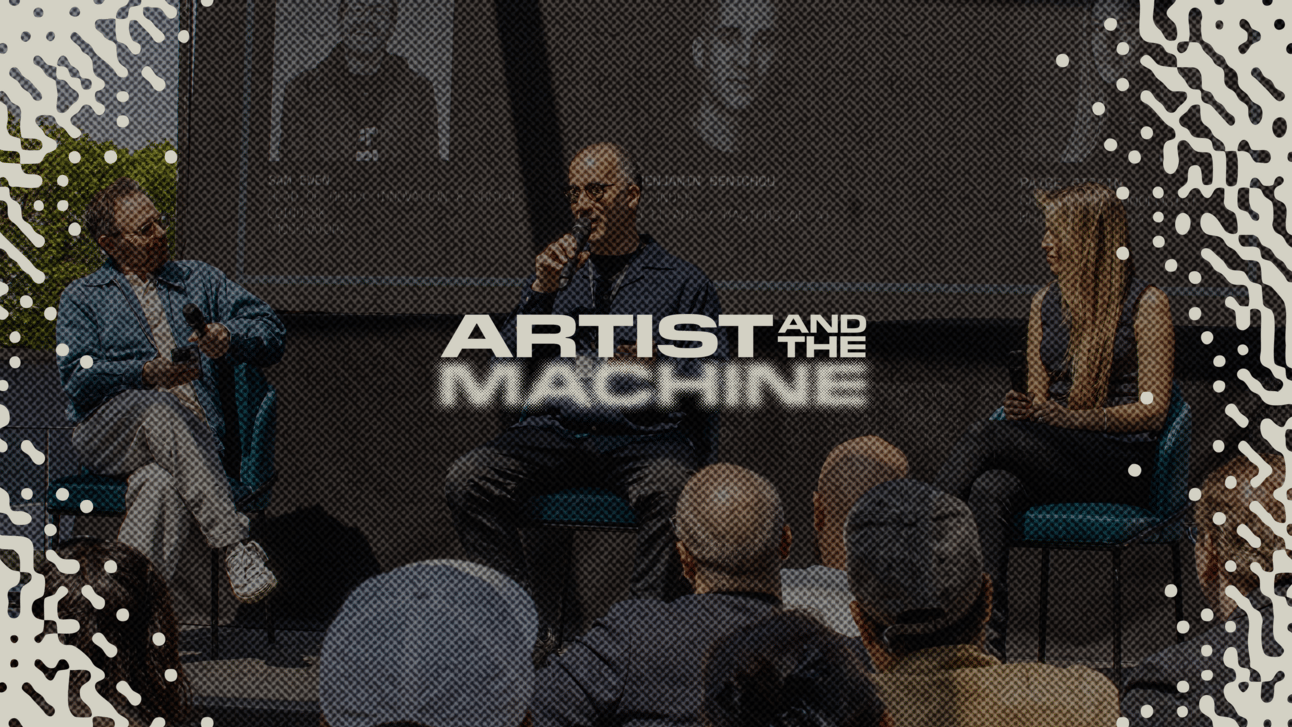
🎤 From The NY Summit: The Creator’s Playbook: Interview with Benjamin Benichou and Paige Piskin

Each week we bring to you some of the most prominent voices in AI & Creativity. Continuing our interview series, we will be showcasing never seen before programming and content from our inaugural Summit in NY! For those of you who missed out, and for those who know just how valuable our speakers insights were. Up first is Sam Ewen interviewing Benjamin Drop and Paige Piskin. Read below and check it out on our Youtube channel!
I want to go into more of the psychology of what you’re building and how we should be thinking about the relationship between you as artists and the technology itself. So first question is, I want to know what your first computer was?
BENJAMIN: My first computer was like a PC when I turned 11 years old. The funny thing is my parents are not tech savvy at all. I honestly to this day don’t really understand why they decided to buy this PC for me at such a young age.
PAIGE: I also started out with a PC, a big box computer that was like the house computer that everybody shared and we had dial up internet back then.
If everyone can be an artist, what does it mean to be an artist? What turns you on the most about AI?
BENJAMIN: The speed of execution and creating content. Tonight there is an opening of the new show at Mercer Labs. I worked on about half of the content for the main room. This is something that wouldn’t have been possible even a couple of months ago. It would have taken me an entire team and months of development with the technology yet in just a couple of weeks I was able to take on this project and creating good content.
PAIGE: I love customized model training. I like personalizing AI as much as I possibly can. I’ve been doing a lot of training on my own works, creating a data set of my drawings, 3D models, filters, even portraits of myself to personalize an AI model that feels true to me. So that for me has been very exciting because I really feel like it’s a branch of my art and it has my fingerprint on it.
When you work with on your client’s work, how are you protecting yourself? Because the tools are democratized. So how do you protect your personal vision, your fingerprints, not only for your client, but also for your future in this world?
PAIGE: So the models that I create are private, like they’re either local on my own computer using tools like comfy UI, stable diffusion, or I use a tool where I have private models as well. And so by doing that, I could protect my style. However, technically somebody could take my work that’s available and create a dataset off of it. But I think it’s my own personal style and I for the work that allows it to go the place I’d want it to go.
BENJAMIN: I totally agree with that. I feel you say with the commoditization of the tool and everything and the lower barrier to entry, I think it became even more important to, you know, create almost your own IP around your work, even if it’s a commercial project for a client. I think it’s important to have your own style and vibe and everything. Because AI or not AI, people always have been able to rip off other artists’ work, right?
My final question for you. I found your first social media posts from over a decade ago What would each of those people at that moment think of the work you are doing today?
BENJAMIN: I mean this is crazy because I think the Benny from this era would have never seen that I would have been exhibited in a museum and I will not just be a curator anymore but like part of the conversation. So yeah, I think he can be proud. I hope he is.
PAIGE: Man, I mean, I think my past self would be so hyped to see that I still love cat content and I share, and then I’m actually generating cat content now.
Watch the full panel talk HERE!
🔦 Spotlight: Google Veo 3

Yesterday Google broke the internet with its release of Veo3. Google’s AI video model. The videos that are being produced from these prompts using the tool are actually mind blowing. Realism is at an all-time high and with generative audio to match, scenes are getting created that are indistinguishable from reality. This video which is supposed to mimic the HAWK TUAH clip, but instead talking about AI, is a must watch. The film industry is about to have a paradigm shift, there is no two ways about it.
Til next time,
Dani Van de Sande (Founder), James Joseph (The Weekly’s Editor) & the Artist and the Machine team.
ARTIST AND THE MACHINE is a free newsletter featuring the latest in AI x culture. Subscribe so you never miss an issue, and if you liked it, share with 1-2 friends.
xx



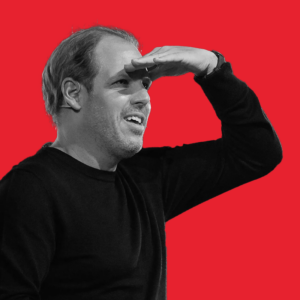
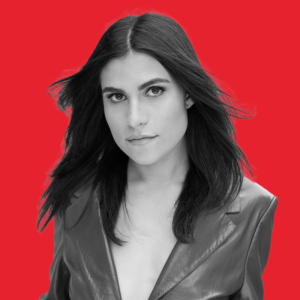








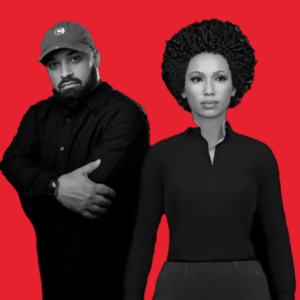
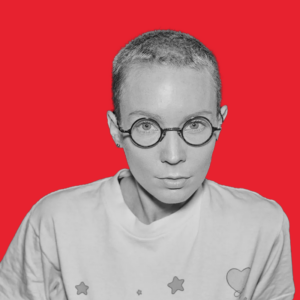




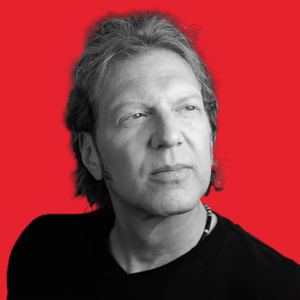

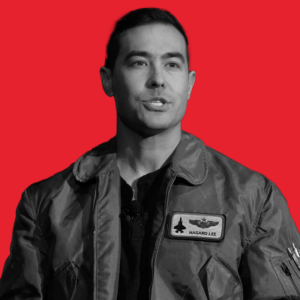





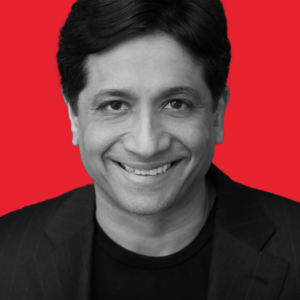
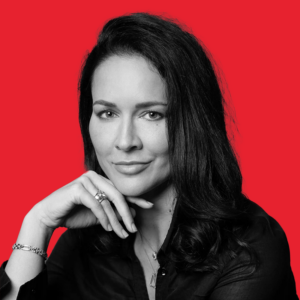









 Paige Piskin is an award-winning AI and XR creator, known for pushing the boundaries of digital makeup, character design, and augmented reality experiences. With AR effects generating more than 300 billion impressions, shared 2 billion times, Paige has worked with major brands like Netflix, Bratz, Warner, and Coldplay, bringing immersive storytelling to life. She has also been a guest judge for Netflix, consultant, and 2x hackathon winner, recognized for her innovative work in AI-driven AR experiences. Paige is passionate about blending generative AI with character design, expanding the possibilities of digital self-expression and interactive storytelling.
 Claire Silver is an anonymous AI-Collaborative artist that works with oil, acrylic, collage, photography, and different digital mediums to create her work. She often blends the classical style and mythos into her art, collaboratively producing work that feels at once familiar and strange. Her work explores themes of innocence, trauma, the hero’s journey, and how our view of them will change in an increasingly transhumanist future. Claire’s art can be found in the permanent collection of the Los Angeles County Museum of Art, has been at Sotheby’s London and Christie’s New York and in galleries, museums, and festivals all over the world. Featured in the New York Times, WIRED, Fortune, NPR, and countless podcasts, Claire takes every opportunity to explore her unending fascination with AI, fight for visibility for this budding art movement, and wonder at the magnitude of this moment in history. She often feels like a caveman painting fire. Claire is vocal in her belief that with the rise of AI, for the first time, the barrier of skill is swept away and that in this evolving era, taste is the new skill.