

Into the Spatial Frontier

Theme
Language models know everything about the world except how to exist in it. That gap is now closing. World models don’t predict the next word, they reason about space: what persists when a camera turns, how light bends around a surface, what exists behind a closed door. They are built on the same sensory feedback that orients a human body in a room.
Last month, that proposition attracted serious money. Fei-Fei Li’s World Labs closed a $1 billion round anchored by a $200 million investment from Autodesk. Not incidentally, Autodesk’s software underpins virtually every building designed, film set constructed, and product engineered in the modern world.
Signal
The creative case for world models is already taking shape: environments with minimal production budgets, explorable spaces that trigger something 2D media never could. But the deeper story is what creation costs, and what it produces.
World models learn from use. Every environment shaped, every space explored becomes training data for machines learning to inhabit a physical world. The Autodesk investment makes this explicit – a company whose tools sit at the center of architecture, film, and manufacturing is betting that spatial AI belongs inside the creative process itself as a new design primitive.
The creatives building in these environments transcend mere early adopters, and become co-authors of what comes next.
Summit
We’re delighted to welcome frog as a sponsor of our NY Summit: frog challenges the status quo to build experiences that win hearts and move markets.
Part of Capgemini Invent, frog is a leading global creative consultancy. They partner with passionate leaders and visionary entrepreneurs, applying creativity, strategy, design, and data to re-invent businesses, drive growth, and orchestrate customer-centric transformation. Learn more about what’s next for individuals, businesses, society, our planet and beyond in their report, Futurescape: Artificial Realities.
Our NY Summit on May 14 will take place at The Lighthouse Brooklyn: A creative campus set inside the restored Eberhard Faber Pencil Factory in Greenpoint. Built for creators and cultural founders, the space carries a lineage of craft – a fitting setting for the leaders shaping the future of AI and Creativity.
Pulse
-
Claude launches a memory import feature: In case you’re considering taking the plunge on a new AI tool but are concerned it doesn’t have all the context.
-
Could robot phones be the next leap in physical AI?: Fast Company breaks down why it’s time to rethink the familiar slab smartphone.
-
Community member launches The Monster Library: An AI-native studio creating emotionally intelligent characters designed to combat loneliness, now growing across 1.5M+ fans.
We hope to see you in NY on May 14, 2026, where we will continue these conversations on the forefront of AI and Creativity:
If you’re creating something aligned with Artist and the Machine or you’d like to recommend work shaping this space, we’d love to see it for the chance to be featured. Reach out to us at community@artistandthemachine.com.
Til next time,
Artist and the Machine.
xx

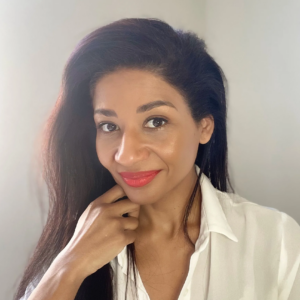

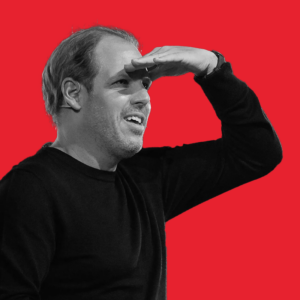









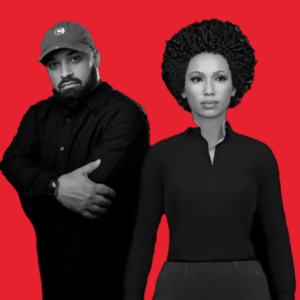
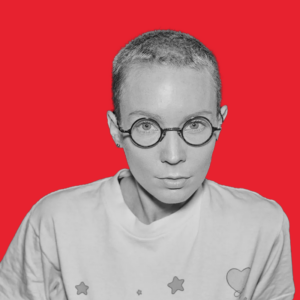
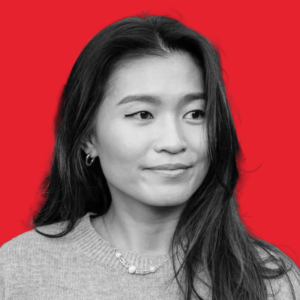


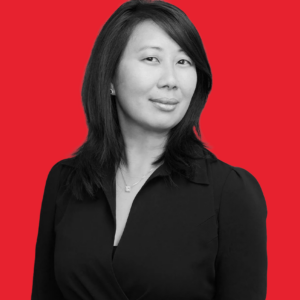
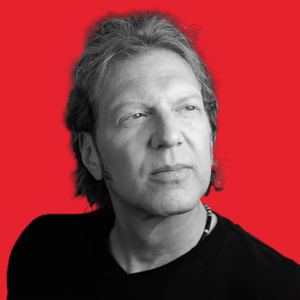

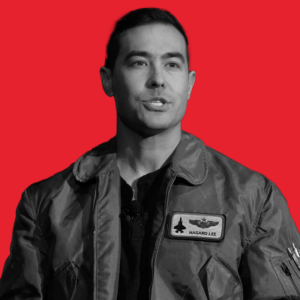




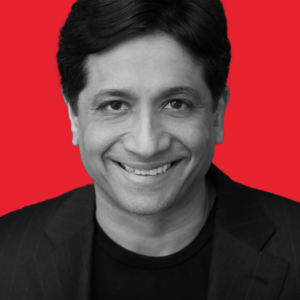
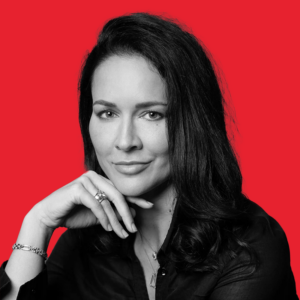






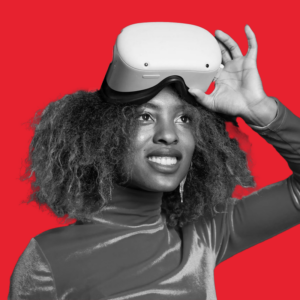


 Paige Piskin is an award-winning AI and XR creator, known for pushing the boundaries of digital makeup, character design, and augmented reality experiences. With AR effects generating more than 300 billion impressions, shared 2 billion times, Paige has worked with major brands like Netflix, Bratz, Warner, and Coldplay, bringing immersive storytelling to life. She has also been a guest judge for Netflix, consultant, and 2x hackathon winner, recognized for her innovative work in AI-driven AR experiences. Paige is passionate about blending generative AI with character design, expanding the possibilities of digital self-expression and interactive storytelling.
 Claire Silver is an anonymous AI-Collaborative artist that works with oil, acrylic, collage, photography, and different digital mediums to create her work. She often blends the classical style and mythos into her art, collaboratively producing work that feels at once familiar and strange. Her work explores themes of innocence, trauma, the hero’s journey, and how our view of them will change in an increasingly transhumanist future. Claire’s art can be found in the permanent collection of the Los Angeles County Museum of Art, has been at Sotheby’s London and Christie’s New York and in galleries, museums, and festivals all over the world. Featured in the New York Times, WIRED, Fortune, NPR, and countless podcasts, Claire takes every opportunity to explore her unending fascination with AI, fight for visibility for this budding art movement, and wonder at the magnitude of this moment in history. She often feels like a caveman painting fire. Claire is vocal in her belief that with the rise of AI, for the first time, the barrier of skill is swept away and that in this evolving era, taste is the new skill.